

01、雅思听力 Listening
本次考试题型组合不算常规,其中 Part 3 考查了流程图题型。Part 3 为《9分达人雅思听力真题还原及解析8》中原题,本书上市不久,但其中题目已经在机考、纸笔中多次出现,推荐各位同学将其作为考前冲刺练习仔细消化。
Part 1 搬家服务预定
【题型】: 填空
点评
场景为服务咨询场景,整体答案词难度一般,均为高频机经词。Part 1 的答案词虽然简单,但同学们切不可掉以轻心,扎扎实实地打牢单词拼写基础,为后面的题目做好铺垫。
1. Makora
2. 7149CF
3. city
4. glass
5. oven
6. umbrella
7. table
8. bikes
9. total
10. stone
(答案仅供参考,实际答案及顺序可能有变化)
Part 2 商场改建计划
【题型】:单选+地图
点评
该篇目话题较为常规,选择难度中等,地图也不算复杂,建议同学们多注意单选干扰的排除技巧,多复习地图的基础方位表达,做好能力范围内的题目。
11. B
12. C
13. B
14. A
15. B
16. B
17. G
18. E
19. B
20. A
(答案仅供参考,实际答案及顺序可能有变化)
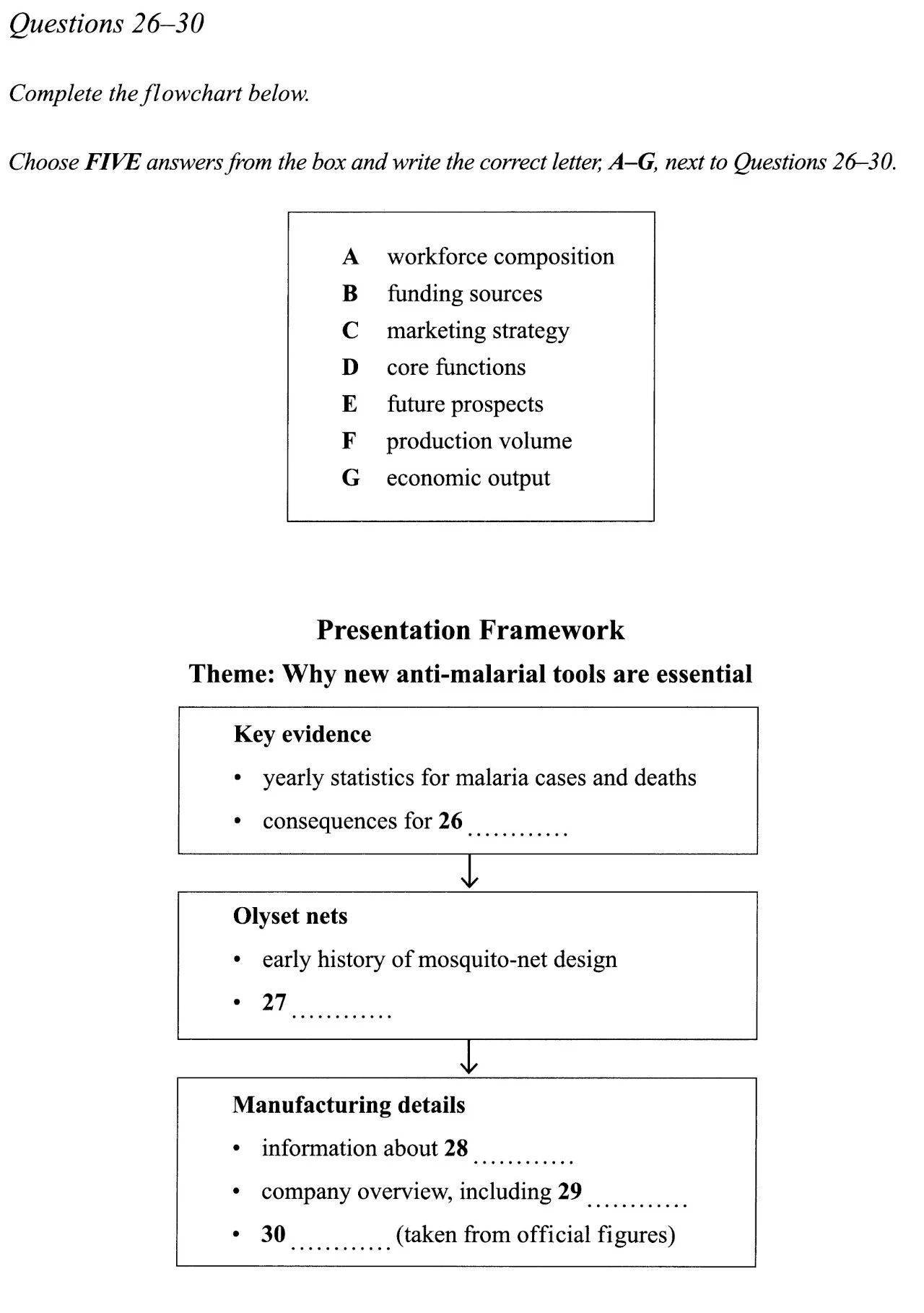
Part 3 产品开发演示——蚊帐
(9分达人8-Test 6-Part3原题)
【题型】:单选+流程图
点评
本篇题目话题难度较高,且出现 “malaria” 这类较难词汇影响背景理解。同时,在题目中的整体信息量也偏大,需要注意选项与音频的对应。本篇的流程图在定位上也有较大难度,需要同学们紧跟节奏,迅速抓取同替。流程图整体考频不高,但同学们也需要在考前进行适当练习以备不时之需。
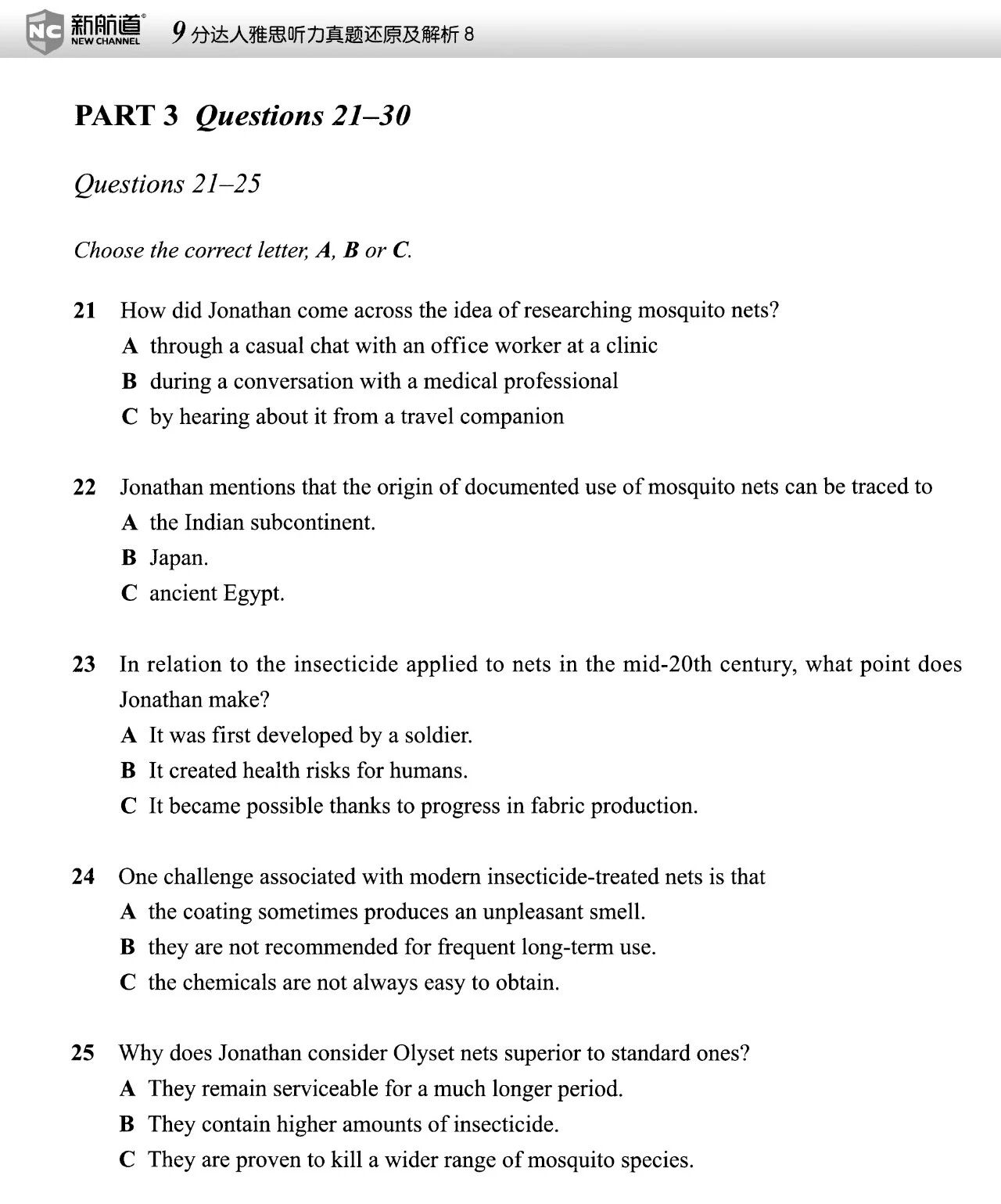
21.A
22.C
23.B
24.C
25.A
26.G
27.D
28.B
29.A
30.F
(答案仅供参考,实际答案及顺序可能有变化)
Part 4 语言的特殊类型
【题型】:填空
点评
本次 Part 4 为人文科学场景,且整体答案词偏高,需要注意 “commerce”、“rare” 单词的发音。对于人文科学的题目,同学们需要多加熟悉不同的具体话题和机经词,做到对不同话题心中有数,同时打好单词发音及拼写基础。
31. existing
32. commerce
33. standard
34. Greek
35. invented
36. mixture
37. children
38. limitations
39. advanced
40. rare
(答案仅供参考,实际答案及顺序可能有变化)

02、雅思阅读 Reading
宝子们!这次雅思阅读又双叒叕“搞事情”啦!三篇文章分别聚焦商业营销、嗅觉心理学和翻译行业,难度层层递进,最后一篇直接“封神”(难哭了有没有)!Passage 1 理想自我:TF家居踩坑案例告诉你,老年人不想被贴“老”标签,就像减肥产品不说“胖”——卖的是“理想中的自己”! Passage 2 杏仁核:嗅觉比图像更能戳中情绪!闻香水激活的“情绪开关”,比看照片猛多了(下次表白记得喷对香水)Passage 3 耳音延迟:同传翻译的“生死时速”!说话超过200词/分钟,准确率直接“跳水”,比追公交还刺激!
考情小吐槽:
第一篇填空题别瞎找!跟着专家名字“Donna”、“Alex”定位,比大海捞针香多了~
最后一篇翻译术语绕晕你?记住“交替传译=等说完再翻”“同声传译=边听边说”,保你不懵!
Pasasage 1 Why good ideas fail
【难度】:⭐⭐⭐
【题型】:判断5+填空8
【话题】:商业与市场营销
判断
1. TRUE
2. TRUE
3. NOT GIVEN
4. NOT GIVEN
5. FALSE
填空
6. surface
7. weight loss
8. name
9. container
10. behavior
11. focus groups
12. (simple) surveys
13. instincts
(答案仅供参考,实际答案及顺序可能有变化)
点评
职场人必看!从TF失败案例扒出的扎心真相
TF家居转型老年市场却遇冷?根源在于用户调研只看表面态度,没挖到老人怕被“贴标签”的潜意识——他们想买的是“理想中的自己”,不是“真实的衰老”。就像减肥产品不强调“胖”,冲浪服广告用冲浪者而非上班族,理想自我才是消费密码!别再做“老年中心”式营销,多去用户家观察(比如看药盒当收纳盒的细节),或用焦点小组找用户画像,才能让产品既实用又不“显老”。
【解题技巧】
判断题技巧
划关键词:如题干中的 “cost more than expected”, “coffee shops sold own brand”,回原文找对应表述。
警惕绝对词:如“only”, “all”,原文未出现则优先考虑 NOT GIVEN。
对比逻辑:若题干与原文存在“喜欢vs抱怨”、“支持vs反对”等矛盾,直接选 FALSE。
填空题技巧
定位专家观点:根据 “Donna Sturgess”、“Alex Lee”分段查找,避免跨段落混淆。
抓逻辑衔接词:如“First”、 “also”提示并列或递进关系,帮助锁定答案位置(如“name”对应“First we came up with a name”)。
检查词性:如第9题需填名词(container),第13题需填名词复数(instincts),确保语法正确。
通用技巧
先读题后看文:带着问题定位原文,节省时间(如先看判断题题干,再找TF调研相关段落)。
标记高频词:如“market research”、 “emotions”、“ideal self”等反复出现的词,多为考点核心。
【备考建议】
限时训练:每篇阅读控制在15-20分钟,提升快速定位能力。
错题分析:总结“Not Given”与“False”的区别,避免重复踩坑。
积累同义替换:如“assist”=“make life easier”,“focus groups”=“group interviews”,帮助理解原文与题干的对应关系。
参考文章:
Why Good Ideas Fail
As part of a marketing course, two marketing experts comment on a hypothetical case study involving TF, a fictional retail giant specializing in home furnishing. The experts give concrete solutions and advice to assist students.
Hypothetical Case Study:
TF became a retail success in the 1970s when it succeeded in spotting homeware trends and meeting the needs of its then trendy young customers. However, by 2004, the TF stores were failing, and a rethink was clearly necessary. Tibal Fisher, TF's founder and CEO, decided to change its focus under the new brand name of TF's NextStage. His aim was to recapture the now ageing customers who had given him his early success and target consumers aged 60+ with devices and gadgets specifically designed to assist them with the problems associated with ageing: mobile phones with screens that were easy to read; kitchen gadgets with comfortable grips; electronic devices that were easy to set and adjust. TF's market research proved to be very positive, showing strong consumer support for the products.
In 2007, the stores were remodeled at a cost of US $40 million and the new brand was launched. Each store was made more comfortable and featured a coffee shop to help increase traffic - Tibal had predicted that if they could get customers into the stores then the products would sell themselves. However, by 2009 it was clear that the idea was a failure and the stores consistently remained empty. Customers complained that the new stores felt like a senior center and reminded them that they were growing old.
Feedback from Experts
Expert 1: Donna Sturgess, global head of innovation, GlaxoSmithKline
The team's customer research efforts are a classic case of missing the subconscious associations at work in consumers' minds. Tibal and his executives looked only at surface attitudes. Since those attitudes make up a relatively small part of the total consumer response, the executives are clueless about the reason for the poor sales. It's critical for companies to understand that every customer relates to a brand emotionally, and it's those emotions that trigger - or block - purchases.
That's why we've focused on using emotional strategies behind branding for a number of years now. A great example is Alli (pronounced 'ally'), a drug to aid weight loss. The product deals with a highly emotional issue, so in marketing it, we faced the same challenge that the new TF's stores are facing: the very thought of buying the product reminds customers that they have problems they feel negatively about. In the case of TF's NextStage, the problems are age and infirmity. In the case of Alli, the problems are excessive weight and its consequences. There's always a risk that consumers' negative feelings will discourage them from starting or staying on a diet. So, after extensive market research, we took a number of steps to inject positive emotions into the whole process of using the product.
First we came up with a name that sounds like a helpful partner. We also aimed to make the container both beautiful and functional — something that didn't just hold pills but could later be used to store diet guides and recipes. Traditional market research is unlikely to uncover ideas like this, so we use a wide variety of techniques. Even simple techniques such as one-on-one interviews, or ethnographical observation that involves going into people's houses to examine their behaviour, can provide valuable data.
Expert 2: Alex Lee, president of OXO International, maker of OXO Good Grips household products
This retailer can get back on track by remembering a principle that applies to consumers in general and those aged 60+ in particular: they're attracted by brands they associate with the type of people they'd like to be - not the type they really are. That's why marketing campaigns for surf gear feature surfers, not the city dwellers who will wear the products while doing their shopping. He was reminded of this principle a few years ago when they wanted to find out how far they could apply their design philosophy of making things easier to use in order to move from their core business, kitchen tools, into other products.
They conducted what are known as focus groups, where participants were asked to look at photos of people and pick those they perceived to be users and non-users of their products. Consistently they picked people who looked fit as the sort who would use their products, and people who looked old and boring as the sort who wouldn't. Yet the participants, all owners of their products, looked a lot more like the latter than the former.
Although the needs of elderly users and those with deteriorating vision or dexterity are very much taken into consideration when we develop new designs, we try to offer an appeal to 20- and 30-year-olds. We believe that referring to these products as helping tools would serve only to harm the brand in our customers' eyes. That's why our philosophy of universal design, which involves creating products that are comfortably usable by the largest possible range of people, is never explicitly stated as part of our marketing position.
We've found that market research does not need to be very sophisticated. For instance, we have conducted simple surveys in the lobby of our building offering free products in exchange for people's opinions. Some may call this unscientific but we have uncovered great insights this way. Sometimes the most important signals come from an executive's own instincts. In Tibal Fisher's case, this could have told him what his surveys and focus groups didn't: 60-plus-year-olds won't support a business that expects them to act their age.
Questions 1-5
Do the following statements agree with the information given in Reading Passage? In boxes 1-5 on your answer, write
TRUE if the statement agrees with the information
FALSE if the statement contradicts the information
NOT GIVEN if there is no information on this
1. The TF's Nextstage stores planned to sell products to make life easier for older people
2. TF's market research indicated that people liked the products.
3. It cost more than expected to remodel the TF stores.
4. The TF's Nextstage coffee shops sold their own brand of food and drink.
5. TF's Nextstage customers liked the atmosphere in the new stores
Questions 6 - 13
Complete the notes below.
Choose NO MORE THAN TWO WORDS from the passage for each answer.
Write your answers in boxes 6-13 on your answer sheet.
Feedback from experts
Donna Sturgess
Problems with customer research:
•TF team limited their research to attitudes that occur at a 6 ..................... level in customers' minds
•TF didn't consider customers' emotions
How my company dealt with a similar problem:
•Product: Alli
•Use: help people achieve 7 .....................
•Marketing aim: help customers see the product a positive way by:
•Giving the product a 8 ..................... that seems helpful and supportive
•Giving the product a reusable 9 .....................
Market research:
•Does not need to be complex
•Good information can come from interviews or studying the 10 ..................... of consumers in the home
Alex Lee
Problem:
•Customers are attracted to the ideal, not the reality (e.g., ads for surf gear)
How my company dealt with a similar problem:
•We organised 11 ..................... to find out what images customers associate with our products
•We do not call our products helping tools in our marketing campaigns
Market research:
•Can be basic, e.g., by doing 12 .....................
•Company executives should follow their 13 .....................
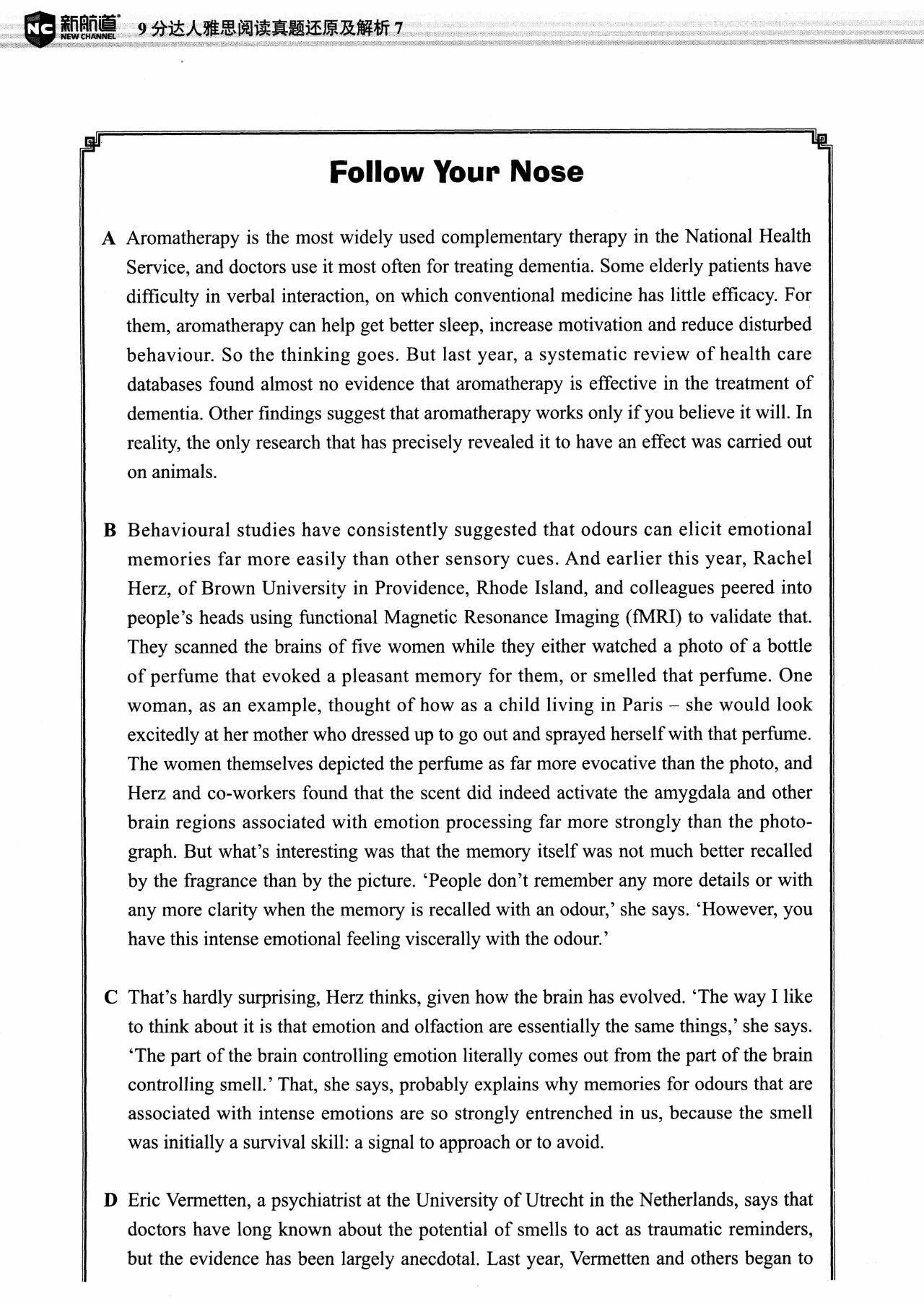
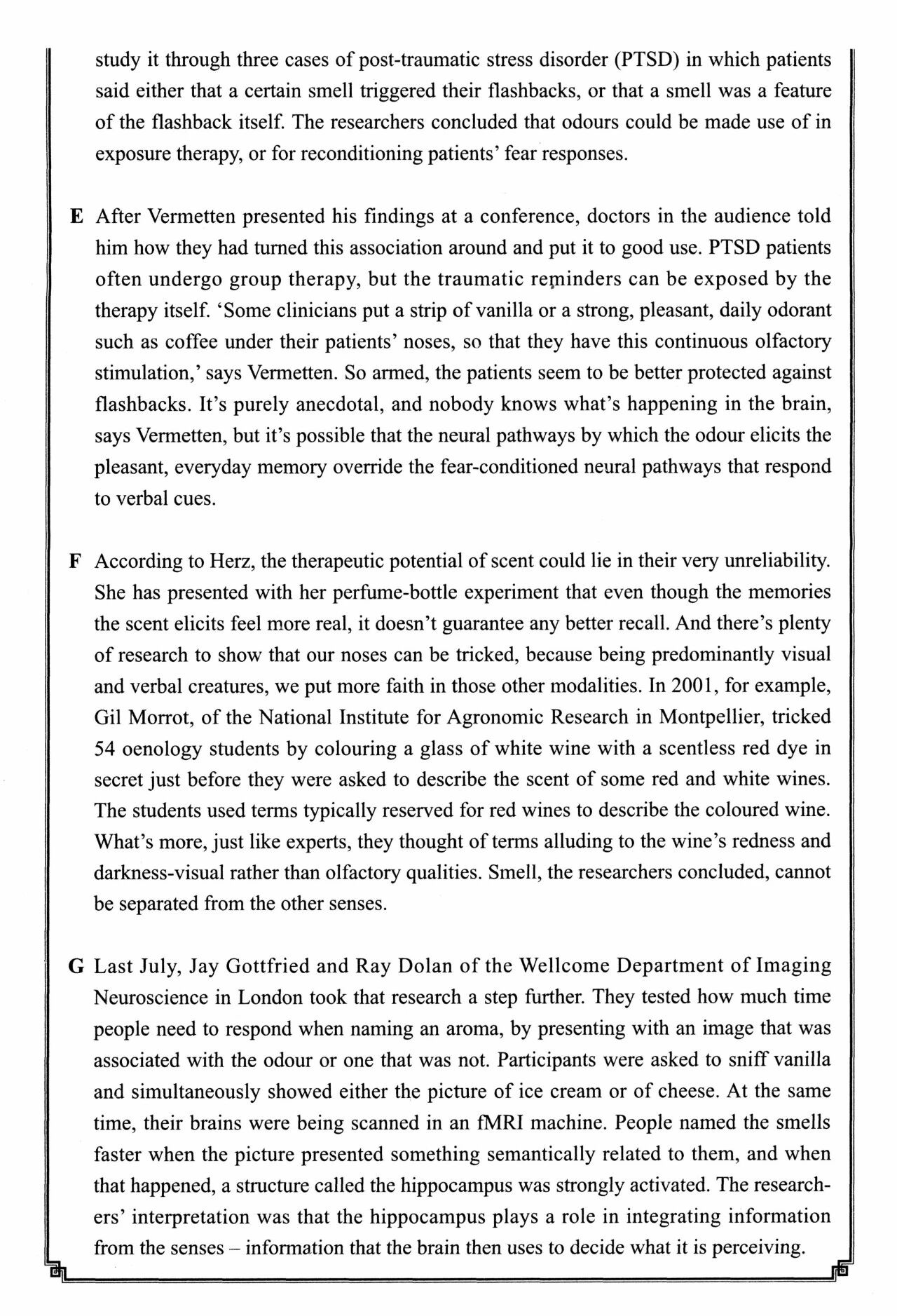
Passage 2 Follow your nose
【难度】: ⭐⭐⭐⭐
【题型】: 主旨配对5 + 特殊词匹配6 + 单选2
【话题】:行为心理学
主旨配对
14. IX
15. III
16. V
17. VII
18. VI
特殊词配对
19. B
20. A
21. D
22. A
23. C
24. A
单选
25. B
26. B
(答案仅供参考,实际答案及顺序可能有变化)
点评
本文探讨嗅觉与记忆、情绪的关联及应用。研究显示,气味比图像更易触发强烈情绪记忆(如香水激活杏仁核),但不提升记忆清晰度;气味可用于创伤后应激障碍(PTSD)治疗,如香草味缓解闪回;多感官整合实验(如香草+冰淇淋图像)发现海马体参与感官信息整合;同时指出嗅觉易受视觉干扰(如红酒染色实验),且芳香疗法对痴呆的疗效缺乏人类证据。
【专业术语】(神经科学/心理学)
杏仁核(amygdala):参与情绪处理的脑区,气味激活该区域强于图像。
海马体(hippocampus):负责多感官信息整合(如气味+图像的语义关联)。
功能性磁共振成像(fMRI):用于扫描大脑活动的技术,文中多次提及实验应用。
创伤后应激障碍(PTSD):一种精神障碍,气味可用于其治疗(如香草味缓解闪回)。
多感官整合(multisensory integration):大脑对不同感官信息(如嗅觉+视觉)的联合处理。
参考文章:
《9分达人阅读真题还原及解析7》 Test 3 Passage 2
Passage 3 Translating: a key to international understanding?
【难度】:⭐⭐⭐⭐⭐
【题型】: 信息配对3 + 摘要填空4 + 句子配对4 + 多选3
【话题】:语言学类
信息配对
27. E
28. H
29. B
摘要填空
30. semantic equivalent
31. purpose
32. stylistic
33. content
句子配对
34. E
35. B
36. D
37. C
多选
38. B
39. D
40. F
(答案仅供参考,实际答案及顺序可能有变化)
点评
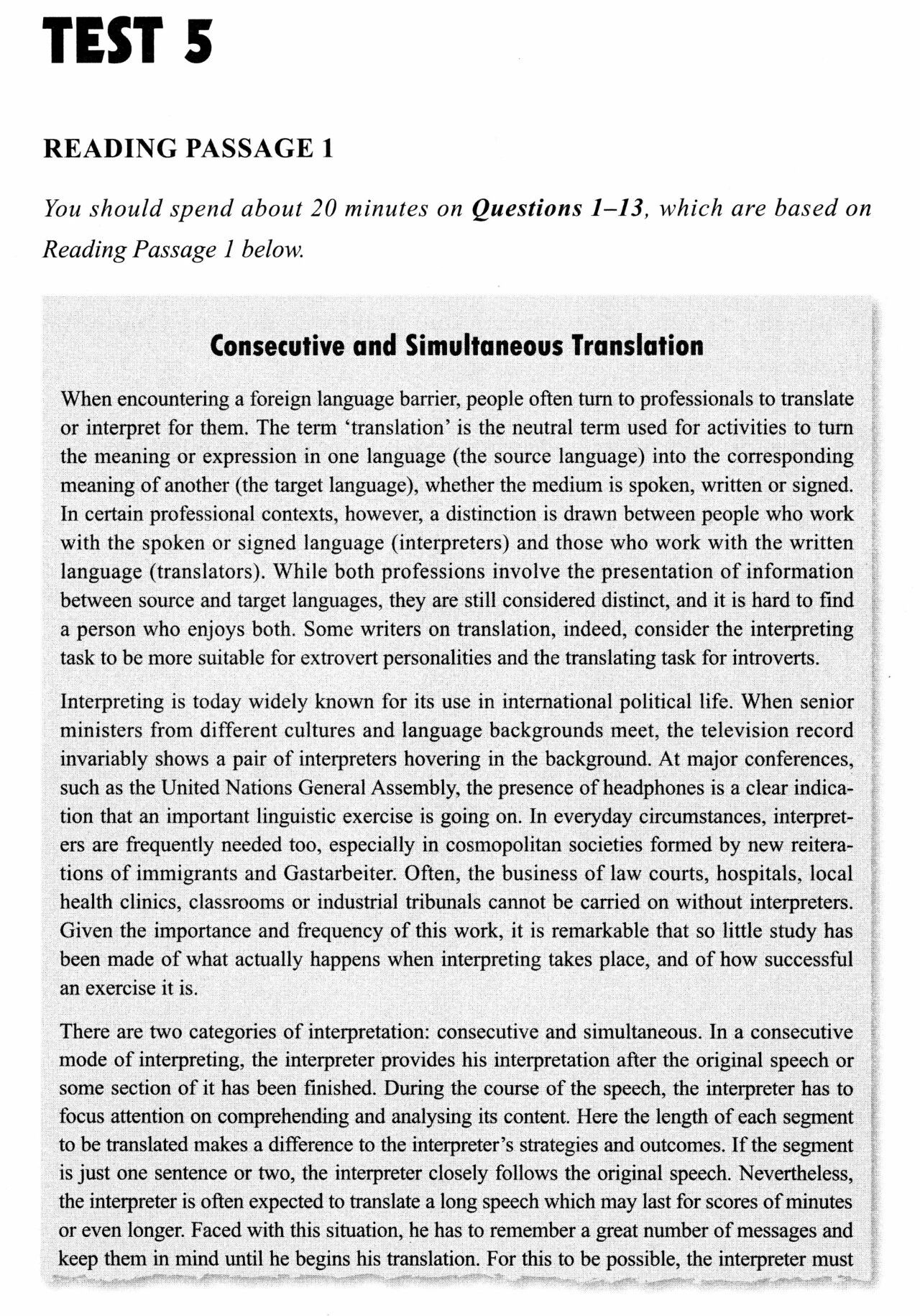
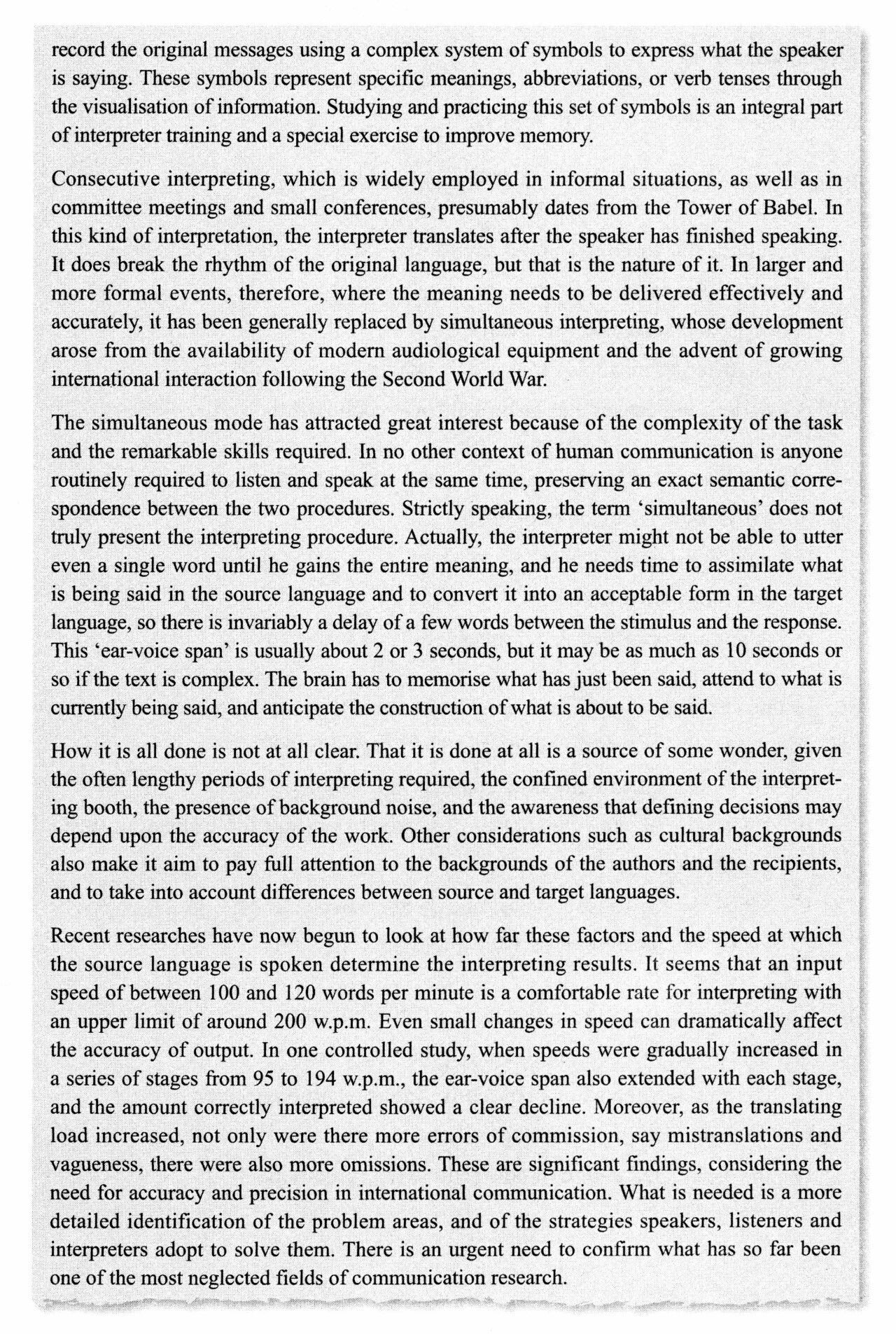
你知道翻译和口译的区别吗?翻译是笔译,口译则是现场“转译”,分交替传译和同声传译两种。交替传译适合小场合,需要等对方说完再翻译;同声传译则是边听边说,对反应速度和记忆力要求极高。研究发现,说话速度超过200词/分钟,同传准确率会直线下降,环境噪音、文化差异也会影响效果。这些“隐形翻译官”的工作,远比我们想象的更复杂!
重点记忆口译相关术语:consecutive(交替的)、simultaneous(同时的)、ear-voice span(耳音延迟)、abbreviation(缩写)。
掌握数字与单位:w.p.m.(词/分钟)、seconds(秒),注意原文数据的精准提取。
参考文章:
《9分达人阅读真题还原及解析7》 Test 5 Passage 1

03、雅思写作 Writing
小作文
This table below shows percentages of satisfaction that First-Year students rated their modules in five aspects in 2014.

点评
这是一道表格题(table),展示了2014年一年级学生对三门课程(Economics、Law、Commerce)在五个方面的满意度百分比。解题时应先抓住总体特征(overview),再进行对比分析。
从整体看,Commerce 在几乎所有方面的满意度最高,而 Economics 在课前信息(Pre-course Info)和其他资源方面表现相对较弱。Teaching 和 Tutor 两个教学相关指标整体评分较高,尤其是在 Commerce 和 Economics 中。
写作结构建议采用四段式:
引言段改写题目
总览段概括最高/最低与总体趋势
主体段 1:对比三门课程的教学相关指标
主体段 2:对比资源与课前信息
可用高分表达包括:
Overall, it is clear that…
Commerce consistently recorded the highest percentages across most categories.
By contrast, Economics received the lowest rating in…
A noticeable gap can be seen between…
大作文
Some people think the best way to improve road safety is to increase the minimum legal age for driving cars and motorcycles. To what extent do you agree or disagree?
点评
这是一道观点类题目(To what extent do you agree or disagree),核心讨论的是:提高法定最低驾驶年龄是否是改善道路安全的最佳方式。题目中的关键词 the best way 具有绝对化倾向,因此在解题时更容易选择部分同意或不同意的立场,通过提出其他更有效或同样重要的措施来进行论证。
写作思路上,可以先承认提高驾驶年龄在一定程度上有助于减少事故,例如年轻驾驶者经验不足、风险意识较弱;但进一步指出,道路安全更多取决于驾驶培训质量、交通法规执行力度以及道路基础设施,而非年龄本身。
结构建议采用四到五段式:
引言段表明立场(partly agree / disagree)
主体段 1:提高驾驶年龄的合理性
主体段 2:指出其局限性并提出替代措施
结论段总结观点
高分表达可使用:
While raising the legal driving age may reduce accidents to some extent…
It is overly simplistic to regard age as the decisive factor…
More effective solutions include stricter training requirements and law enforcement.